What If a Simple QR Code Could Bridge the Gap Between You and Your Child’s World?
Remember those nights staring at your phone, wondering how to make screen time feel more meaningful? What if the same technology we use for payments and downloads could help you connect with your child—not just entertain them? QR codes, quietly embedded in everyday life, might be the unexpected key to shared learning, playful routines, and real connection—without the tech overwhelm. They’re not just for menus or boarding passes anymore. These little black-and-white squares can open doors to songs, messages, stories, and surprises that bring you and your child closer. And the best part? You don’t need to be a tech expert. Just a parent who wants a little more magic in the everyday.
The Moment I Realized Screens Were Pulling Us Apart
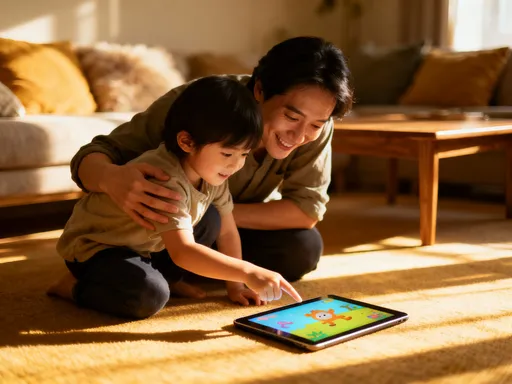
It was a Tuesday evening, the kind that blends into the next without much notice. My daughter sat on the couch, eyes fixed on the tablet, fingers swiping through videos. I was on my phone too—answering emails, checking the grocery list, scrolling mindlessly. We were in the same room, but it didn’t feel like we were together. I called her name. She didn’t answer. Not because she was ignoring me, but because she was completely absorbed. That’s when it hit me: our devices were supposed to make life easier, but they were quietly building a wall between us.
I started wondering—what if our screen time didn’t have to be something that pulled us apart? What if, instead, it could be a bridge? Not another app to download or a gadget to buy, but something simple, already within reach. That’s when I remembered the little square codes I’d been scanning for years—QR codes. I’d used them at coffee shops, on posters, even at museums. But I’d never thought of using them at home, with my child. What if I could turn those few seconds of scanning into a moment of connection? A shared laugh, a learning spark, a memory in the making? The idea felt surprising, almost too simple. But sometimes, the smallest tools create the biggest shifts.
I decided to try. Just one QR code. I made one that linked to a two-minute video of me singing her favorite bedtime song. I printed it, taped it to her nightlight, and waited. That night, she noticed it. “What’s this?” she asked. I showed her how to scan it. When my voice filled the room, she giggled. “You’re in the light!” she said. In that moment, something shifted. The screen wasn’t a barrier anymore—it was a messenger of love. And we were on the same side of it.
QR Codes Are More Than Just Links—They’re Gateways to Shared Experiences
Let’s be honest—most of us don’t really know how QR codes work. And that’s okay. You don’t need to. Think of them like tiny digital doorways. You point your phone at one, and it opens something—a video, a voice note, a picture, a game. No passwords, no logins, no confusing steps. Just scan, and there it is. They’re like magic windows into little moments that matter.
What makes them special for families isn’t the technology—it’s what they carry. That video of Grandma blowing a kiss. The audio of Dad reading a story while he’s away on a trip. A surprise message hidden in the kitchen cabinet that says, “You’re doing great today!” These aren’t just files on a server. They’re emotional gifts, wrapped in a simple square. And when you scan them together, you’re not just using tech—you’re sharing an experience.
One mom I spoke with told me she puts a QR code on the fridge every Monday. It links to a short video of her dancing to a silly song with a message: “Happy new week! What’s one thing you’re excited about?” Her kids run to scan it every morning. It’s become their ritual. It takes 30 seconds, but it starts their day with joy and connection. That’s the power of a QR code—not because it’s advanced, but because it’s personal. It turns the ordinary into something meaningful, one scan at a time.
And here’s the beautiful part: you don’t need special equipment. Just your phone, a free app (most phones can scan QR codes right from the camera), and a printer—or even just a piece of paper. You can make these moments anytime, anywhere. No coding, no tech degree, no budget. Just love, wrapped in a simple square.
Turning Chores Into Adventures Your Child Will Actually Enjoy
Let’s talk about the real challenge: routines. Getting kids to brush their teeth, pack their backpacks, or clean up their toys often feels like a battle. We repeat the same instructions over and over, and still, they forget. Or worse—they resist. What if, instead of nagging, you could spark curiosity? What if a chore could feel like a game?
That’s exactly what QR codes can do. Imagine a small tag on your child’s toothbrush. When they scan it, a fun 60-second song plays—“Brush those molars! Don’t forget the back ones!”—with a cheerful voice and a beat that makes them dance while they scrub. No reminders needed. Just music, movement, and clean teeth. One dad told me he made a QR code that links to a short video of a cartoon character demonstrating proper brushing technique. His son watches it every night and even says, “I want to brush like Captain Cavity Crusher!”
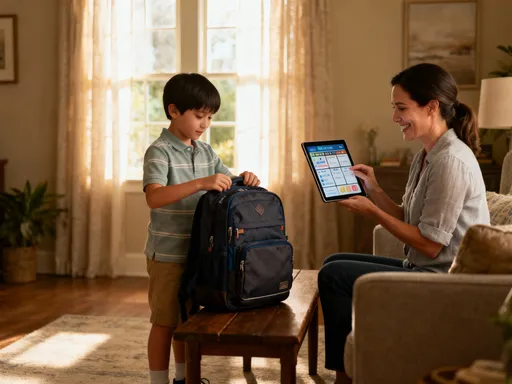
Or think about mornings—the rush to get out the door. What if your child’s backpack had a QR code that, when scanned, showed a checklist with pictures: “Lunchbox? Shoes? Homework?” You record your own voice saying, “Don’t forget your library book today!” and upload it. Now, instead of you shouting from the kitchen, your child takes charge. They scan, listen, and follow along. It’s not just about remembering things—it’s about building independence in a way that feels fun, not forced.
One mom in Ohio turned her entire morning routine into a “Scan & Go Adventure.” She placed QR codes on the bathroom mirror, the breakfast table, and the front door. Each one played a cheerful reminder or a fun fact (“Did you know dolphins sleep with one eye open?”). Her kids scan them like they’re unlocking levels in a game. “It’s not perfect every day,” she said, “but it’s lighter. There’s less yelling, more laughing. And they actually remember their jackets.”
Creating a “Memory Trail” Your Child Will Treasure Forever
Some of the most powerful moments in parenting aren’t the big ones—they’re the small, unexpected ones that catch you by surprise. A hug for no reason. A drawing left on your pillow. A voice saying, “I love you” out of the blue. QR codes can help you capture and recreate those feelings in a way your child will remember for years.
Take Sarah, a mom from Oregon, who used QR codes to create a birthday scavenger hunt for her 7-year-old. She printed out six small codes and hid them around the house—in the toy box, under the pillow, taped to the dog’s collar. Each one, when scanned, played a voice message from a different family member. Grandma said, “You’re the best storyteller I know.” Her little brother giggled, “You’re my favorite sister!” And her dad shared a memory: “Remember when we built that fort in the living room? That was the best day.” At the end of the trail was a final code that led to a video montage of photos and clips from the past year.
Sarah told me her daughter cried—happy tears. “She kept going back to listen to Grandma’s message again and again. It felt like everyone was right there with her, even though some of them live far away.” That trail of codes wasn’t just a game. It was a tapestry of love, woven with sound and memory.
You can do this for any occasion—birthdays, holidays, even “just because” days. Record a message saying, “I’m proud of you,” and hide it in their lunchbox. Make a code that plays a lullaby you used to sing when they were a baby. Link to a photo of the two of you at the beach last summer. These aren’t just digital files. They’re emotional anchors—tiny time capsules your child can return to whenever they need a reminder of how loved they are.
Learning That Feels Like Play—No Pressure, Just Progress
As parents, we want our kids to learn. But we don’t want it to feel like work. We want curiosity, not stress. Joy, not pressure. QR codes can help turn learning into something that feels like play—something your child chooses, not something they’re forced into.
Imagine a “Learning Wall” in your kitchen or playroom. On it, you’ve taped several QR codes, each labeled with a fun icon: a lightbulb, a rocket, a paintbrush. One links to a two-minute video explaining how plants grow. Another plays a catchy song about the water cycle. A third shows a real scientist mixing colors to explain primary and secondary hues. Your child walks by, sees the rocket, and thinks, “Hmm, what’s that?” They scan it. Suddenly, they’re watching a short animation about gravity—laughing, asking questions, wanting to know more.
Teachers are already using this in classrooms. One elementary school in Texas puts QR codes on student projects. When parents visit, they scan to hear the child explain their work in their own voice. It’s more powerful than any written note. At home, you can do the same. Help your child make a code that links to them reading their favorite poem or explaining how they solved a math problem. It builds confidence, pride, and communication skills—all through a simple scan.
And it’s not just science or math. You can link to videos of folk dances from around the world, short stories in another language, or even a virtual tour of a museum. The goal isn’t to replace school. It’s to keep curiosity alive outside the classroom. To show your child that learning doesn’t stop when the bell rings. It’s everywhere—even in a little black-and-white square on the fridge.
Overcoming the “I’m Not Tech-Savvy” Fear—You Don’t Need To Be
I know what some of you might be thinking: “This sounds nice, but I can’t even connect my printer. How am I supposed to make a QR code?” First, take a deep breath. You don’t need to be tech-savvy. You just need to be willing to try. And I promise—this is easier than you think.
Here’s how it works: First, decide what you want the code to link to. It could be a video, a voice memo, a photo, or even a website. Record a quick video on your phone saying, “Good morning, sweetie! Have an amazing day!” or take a photo of your last family trip. Next, go to a free QR code generator website—just search “free QR code generator” in your browser. Upload your file or paste the link. Click “Create.” In seconds, you’ll have a QR code. Download it, print it, and tape it somewhere special.
That’s it. No passwords. No downloads. No confusing menus. If your phone can take a photo, it can scan a QR code. Most smartphones now recognize them automatically through the camera app. If not, you can download a free scanner app in less than a minute. The hardest part isn’t the tech—it’s deciding what message you want to share.
I started with one code. So can you. Maybe it’s a recording of you saying, “I love you,” tucked into your child’s backpack. Maybe it’s a fun fact on the bathroom mirror. You don’t have to do it all at once. Just one scan. One moment. And if it doesn’t work the first time? That’s okay. Try again. Laugh about it. Make it part of the story. Because this isn’t about perfection. It’s about presence. It’s about saying, “I see you. I’m here. And I want our time together to matter.”
Small Scans, Big Connections—Why This Might Be the Easiest Upgrade to Family Life
At the end of the day, we’re not raising kids who need more screens. We’re raising humans who need more connection. More moments that say, “You matter.” More laughter. More “I’m here with you” energy. And sometimes, the simplest tools can deliver the deepest messages.
QR codes won’t solve every parenting challenge. But they can turn a routine into a ritual. A chore into a game. A quiet moment into a memory. They remind us that technology doesn’t have to pull us apart—it can bring us closer, if we use it with intention. It’s not about how many devices we have. It’s about how we use them to show love, spark joy, and grow together.
Think about the last time your child looked up from their screen with excitement in their eyes—not because of a game, but because they just heard your voice from a hidden code in their drawer. That moment is real. That connection is real. And it started with something smaller than your thumb.
So here’s my invitation to you: start small. Just one QR code. Tomorrow. Record a 30-second message. Make the code. Print it. Place it where your child will find it. Watch what happens. You might just find that the most meaningful tech in your home isn’t the tablet or the TV. It’s a little square that says, “I thought of you today.” And in a world that moves too fast, that might be the most powerful message of all.