I kept saying ‘I’ll organize my trip photos later’—this app finally made it happen
Ever found yourself drowning in hundreds of travel photos, promising to organize them “later”? Or struggling to remember the little details—like that cozy café in Lisbon or the name of the trail with the best sunrise? You’re not alone. I used to lose precious memories in digital chaos—until a simple tech tool changed everything. It didn’t just sort my photos; it quietly reshaped how I reflect on, relive, and grow from every journey. Let me show you how.
The Messy Reality of Travel Memories
We all collect moments—snaps of mountain views, receipts from train rides, voice notes from airport waits. But without structure, these fragments scatter. I used to think, “I’ll整理 them when I get back,” only to face a gallery of 800 unsorted images. The joy faded under digital clutter. This isn’t just about storage; it’s about losing emotional connection. When memories feel inaccessible, trips start to blur. The problem isn’t the travel—it’s the aftermath. And like many, I kept postponing the cleanup, mistaking busyness for excuse.
Think about your last family trip. You came home with a phone full of photos, maybe a few videos, a handful of souvenirs. You promised yourself you’d make a photo book, or at least create a shared album for your parents or siblings. But weeks passed. Then months. Now, when someone asks, “How was the trip?” you struggle to recall more than a few highlights. Was that the beach where the kids built the sandcastle? Or the one with the seafood shack? The details blur because they’re not organized—they’re buried. And when memories are hard to reach, they feel less meaningful.
I remember sitting on my couch one Sunday, scrolling through my camera roll, trying to find a photo of my daughter laughing on a ferry in Greece. I knew it existed. I could see it in my mind. But after 20 minutes of swiping, I gave up. That moment—that real, beautiful, fleeting second—felt lost. And it wasn’t just one photo. It was dozens. Hundreds. A whole trip reduced to a vague feeling. That’s when I realized: I wasn’t just disorganized. I was disconnected. The tools I had—my phone’s gallery, a folder on my laptop—weren’t helping me remember. They were helping me forget.
What made it worse was the guilt. I’d think, I should do better. I’d compare myself to friends who made scrapbooks or posted curated Instagram stories. But those options felt too time-consuming or too performative. I didn’t want to perform my trip. I wanted to keep it. I wanted to preserve the real, quiet moments—the ones that mattered most to me, not the ones that would get likes. I needed something simple, personal, and kind to my busy life. I just didn’t know it existed yet.
How a Simple Habit Changed Everything
One evening, I tried a travel journal app that auto-sorted photos by date and location. No complex setup—just turned it on. The next morning, I opened it and saw my Paris trip laid out like a story. That small win sparked something: I wanted to add notes. Then dates. Then weather. Without realizing, I’d formed a daily ritual—just five minutes each night reviewing the day’s journey. It wasn’t about perfection; it was about presence. The app didn’t force me; it invited me. And slowly, the “I’ll do it later” stopped.
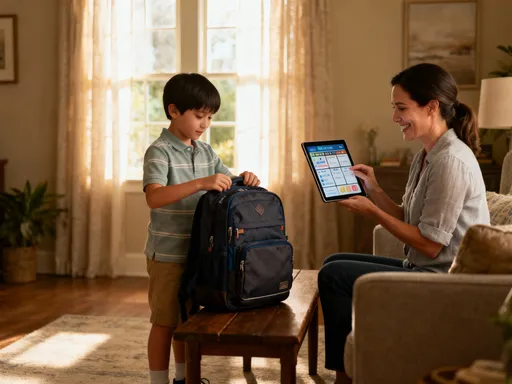
Here’s how it worked: after dinner, while the kitchen was still warm from cooking, I’d sit with my tablet. I’d open the app, and there it was—today’s photos, already grouped. No scrolling. No guessing. Just a clean, quiet space to reflect. I started adding tiny notes: “Olives at the market were incredible,” “Elena danced in the square,” “rain in the afternoon, but we stayed in a bookstore.” These weren’t captions for anyone else. They were breadcrumbs for me.
What surprised me was how quickly it became something I looked forward to. It wasn’t another chore on my list. It felt like a moment of calm. A pause. A chance to say, Today mattered. And because it only took five minutes, I never felt overwhelmed. There was no pressure to write pages or design layouts. Just a few sentences. A photo. Maybe a voice memo if I felt like it. The app didn’t demand anything. It just held the space.
Within a week, I noticed a shift. I started paying more attention during the day—because I knew I’d want to remember. I’d pause to really look at a sunset, not just snap a photo. I’d listen more closely to my niece’s stories, knowing I might jot them down later. The act of recording didn’t steal the moment. It deepened it. And when I traveled alone, it became a way of keeping company with myself. I’d write things like, “I’m proud of myself for navigating the metro,” or “Talked to a stranger who told me about her garden.” These weren’t grand achievements. But they were mine. And now, they were saved.
The Hidden Power of Personalized Travel Tracking
These tools don’t just store data—they learn you. Over time, mine began suggesting tags: “coffee,” “sunset,” “hiking boots.” It remembered I often journaled after dinner. It gently prompted, “Want to add a memory from today’s walk?” That personal touch made it feel less like tech, more like a companion. I started looking forward to the nightly pause. It wasn’t chore—it became self-care. The app adapted to my rhythm, not the other way around. That’s the shift: from managing data to nurturing reflection.
One of the most touching moments came when I was reviewing a trip to Portugal. I hadn’t written anything for three days—just uploaded photos. But the app noticed I’d taken a lot of pictures near water and suggested: “Looks like you spent time by the ocean. Want to add a memory?” I paused. I hadn’t even realized how much the sea had meant to me that week. But seeing that prompt, I remembered—the sound of the waves, the smell of salt, how calm I felt walking the coast. I wrote it all down. That small nudge helped me reconnect with something I’d almost missed.
This isn’t magic. It’s thoughtful design. The app uses location, time, and image recognition—not to track me, but to serve me. It doesn’t bombard me with notifications. It waits. It notices. It asks gently. And because it feels respectful, I respond. It’s like having a friend who says, “Hey, you seemed happy here. Tell me about it.” That kind of care changes how you engage with your own life.
And it’s not just about travel. I started seeing patterns in my daily life too. The app showed me how often I took photos of flowers, or how many mornings I spent with coffee and a book. It reflected back the things I loved, even when I was too busy to notice. That awareness spilled over. I began making more time for walks. I bought a small notebook to carry with me. I started saying “yes” to quiet moments, not just busy ones. The app didn’t change me—it helped me see myself more clearly.
Turning Data into Meaningful Habits
The real magic? Consistency. Five minutes nightly turned into deeper awareness. I noticed patterns—how often I chose quiet mornings over crowded sights, or how my mood lifted near water. The app didn’t analyze me coldly; it reflected my journey back to me. I began planning trips based on past joys, not just destinations. The habit of recording became a habit of noticing. And that changed how I traveled—slower, richer, more intentional. Technology didn’t replace memory; it deepened it.
I used to plan trips by checking ratings and itineraries. Now, I start by looking at my journal. I’ll ask myself: When did I feel most alive last year? Was it in the mountains? By the lake? In a small village with no internet? The answers guide me. Last spring, I saw that my happiest entries were from a weekend in Vermont—no agenda, just wandering, reading, and long meals. So this year, I booked a similar trip. No tours. No checklist. Just space. And it was exactly what I needed.
This shift didn’t happen overnight. It grew from those small, quiet moments at the end of each day. Writing one sentence. Adding a photo. Saying, “This mattered.” Over time, that practice changed my relationship with time itself. I stopped rushing through experiences, waiting to “capture” them later. I started living them—fully, softly, with attention. The app didn’t make me more disciplined. It made me more present.
And here’s something I didn’t expect: my children noticed. My daughter said, “Mom, you seem calmer when we travel now.” My son asked, “Why do you write every night?” I told him I was saving our memories. He thought for a moment, then said, “Can I write one too?” That moment—simple, unplanned—was everything. The habit wasn’t just for me. It was becoming part of our family’s way of being.
Sharing Journeys Without the Stress
Before, sharing travel stories meant hours of sorting and editing. Now, I can generate a mini-story in seconds—photos, dates, notes—ready to send to family. My mom loves the summaries. My sister uses them to plan her own trips. It’s not just personal—it’s connective. We talk more about experiences, less about likes. The app became a bridge, not just a vault. And when I revisit old trips, it’s not nostalgia—it’s gratitude. I’m not just remembering; I’m refeeling.
I sent a summary of our Italy trip to my parents. My mom called the next day, her voice warm. “I felt like I was there with you,” she said. “I loved reading about the lemon tree in the courtyard.” That small detail—something I might have forgotten—had touched her. It wasn’t a glossy travel post. It was real. It was ours. And because it was easy to share, I did it more often. I started sending little updates during trips—“We found a bakery with the best fig tarts,” or “The kids laughed the whole train ride.”
My sister, who’s always been more practical, used the shared journal to plan her own visit to Tuscany. She told me, “I trusted your notes more than any guidebook.” That meant more than any five-star review. Because it was honest. It was from someone who knew what mattered—quiet corners, good bread, moments of peace. The app didn’t just preserve my memories. It helped others create their own.
And when I share with my kids, it’s different too. Instead of just showing photos, I read them the notes. “Remember when we got lost and found that tiny ice cream shop?” They laugh. They remember. The words bring the images to life. It’s not just a record. It’s a story we keep telling together.
Building a Life That Remembers Itself
This isn’t just about travel. It’s about how we live. When small acts—like logging a day’s journey—become routine, we build a life that pauses, reflects, and grows. I’m more mindful, not because I tried harder, but because the tool made it easy. It’s like having a quiet friend who says, “Hey, that moment mattered.” And over time, I started believing it. The habit spread—better sleep tracking, more gratitude notes. One travel app sparked a ripple of awareness.
I started using the same mindset in other areas. I began tracking my sleep—not obsessively, but gently. I’d note how I felt each morning, what I’d eaten, whether I’d moved my body. No pressure. Just noticing. Same with gratitude. I kept a simple list: “Sunlight on the kitchen table,” “a long phone call with my sister,” “the smell of rain.” These weren’t grand. But they were real. And writing them down made them stick.
What I’ve learned is this: we don’t need big changes to live more fully. We need small, kind tools that help us pay attention. The right technology doesn’t distract us. It brings us back—to ourselves, to our people, to the moments that matter. It doesn’t shout. It whispers. And sometimes, that’s exactly what we need.
I used to think self-care meant spa days or long vacations. Now I know it’s also the five minutes at night when I honor my day. It’s saying, You were here. You lived this. That practice has made me softer, kinder, more patient—with myself and with others. And that, more than any photo, is the memory I want to keep.
The Quiet Revolution of Everyday Tech
We often chase flashy gadgets, but real change lives in the simple tools that align with our rhythms. This isn’t about automation replacing us—it’s about tech that supports our humanity. A travel record app that helps you remember not just where you went, but who you were there. That’s powerful. It won’t change the world loudly—but it can change your world, quietly, one remembered moment at a time. And sometimes, that’s enough.
Think about the tools you use every day. How many of them truly serve you? How many make life easier, softer, more meaningful? The best ones don’t demand your attention. They respect it. They fit into your life, not the other way around. They don’t promise to fix you. They simply help you see yourself more clearly.
This app didn’t make me a better traveler. It helped me become a better rememberer. And in a world that moves so fast, that might be the most radical act of all—choosing to remember, to reflect, to feel. Not later. Now. Not perfectly. Just honestly.
So if you’re sitting there, looking at a messy gallery, thinking, One day, I’ll sort this—I get it. But what if you didn’t have to do it all at once? What if you could start tonight, with one photo, one sentence? What if the tool you need isn’t about storage, but about connection? About bringing your memories back to life, not just keeping them safe?
You don’t need more time. You need a different way. And sometimes, that begins with a simple app that says, “Tell me about your day.” Because every journey—big or small—deserves to be remembered. Not for the world. But for you.