How I Found Balance Through Qigong: A Real Journey to Lasting Wellness
For years, I struggled with low energy, constant stress, and slow recovery after injury. I tried everything—diets, workouts, even supplements—but nothing gave me lasting relief. Then I discovered qigong, not as a quick fix, but as a systematic practice rooted in traditional Chinese medicine. What started as gentle daily movements quietly transformed my body and mind. This isn’t about miracle cures—it’s about real, gradual healing. If you're seeking a natural path to rehabilitation and well-being, this journey might be exactly what you need.
The Hidden Struggle: Why Modern Life Breaks Our Natural Rhythm
Life moves fast. For many women in their 30s, 40s, and 50s, the demands of family, work, and personal care often leave little room for rest. The body pays the price. Years ago, I found myself constantly fatigued, unable to recover fully after a minor fall that resulted in a sprained ankle. Doctors prescribed rest and physical therapy, which helped initially, but months later, I still felt stiff, mentally drained, and disconnected from my own body. I wasn’t injured anymore, yet I wasn’t truly healing.
Conventional rehabilitation focuses on restoring function—strengthening muscles, improving range of motion, and managing pain. These are essential, but they often miss a deeper layer: the connection between the mind and the body’s ability to heal. I began to wonder if true recovery required more than movement drills and medication. Was there a way to support the body’s innate intelligence? That question led me to qigong, a practice that has been used for centuries in traditional Chinese medicine to cultivate vitality, restore balance, and promote deep healing.
Qigong offered something different—a low-impact, accessible system that didn’t demand strength or flexibility. Instead, it emphasized awareness, breath, and gentle motion. Unlike high-intensity workouts that often left me more exhausted, qigong felt nourishing. It didn’t push me beyond my limits; it invited me to slow down and listen. In a world that glorifies busyness, this was revolutionary. For the first time in years, I wasn’t trying to fix myself—I was learning to be present with myself.
What Is Qigong? More Than Just Movement
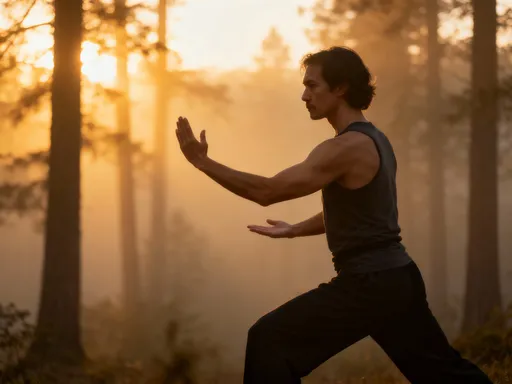
At its core, qigong (pronounced “chee-gong”) is a mind-body practice that integrates breath regulation, intentional focus, and slow, flowing movements. The word itself combines “qi,” meaning vital energy or life force, and “gong,” meaning cultivation or practice. Together, qigong translates to “cultivating energy.” This doesn’t refer to anything mystical or supernatural—it’s about enhancing the body’s natural rhythms and supporting its self-regulating systems.
Rooted in traditional Chinese medicine, qigong has been practiced for over 4,000 years. It’s not a religion or belief system, but a practical method for improving health and well-being. Unlike aerobic exercise or weight training, which primarily target the musculoskeletal system, qigong works on multiple levels: physical, mental, and energetic. It’s often described as “meditation in motion,” but it’s more than that—it’s a way of training the body to function with greater harmony and efficiency.
The practice rests on three foundational pillars: breath, intention, and gentle motion. Breath acts as a bridge between the conscious and unconscious systems of the body. By slowing and deepening the breath, we signal the nervous system to shift from a state of stress (sympathetic dominance) to one of relaxation and repair (parasympathetic activation). Intention—sometimes called “mindful awareness”—directs attention to specific areas of the body, enhancing circulation and promoting cellular regeneration. Gentle motion stimulates the flow of blood, lymph, and interstitial fluids, helping to remove metabolic waste and deliver nutrients where they’re needed most.
While qigong shares similarities with yoga and tai chi, it has distinct advantages in rehabilitation settings. Yoga often involves static postures and deep stretches that may not be suitable for those with joint pain or limited mobility. Tai chi, while gentle, is a martial art with complex sequences that can be challenging for beginners. Qigong, by contrast, is highly adaptable. Movements can be modified for seated or standing practice, require minimal space, and can be learned quickly. This makes it an ideal complement to medical recovery, especially for women managing chronic conditions or recovering from surgery.
Why the Body Responds: The Science Behind the Stillness
For many, the idea of “energy work” sounds vague or unscientific. But modern research increasingly supports the physiological benefits of qigong. Studies have shown that regular practice can significantly improve autonomic nervous system function. One 2018 review published in the Journal of Alternative and Complementary Medicine found that qigong consistently reduced markers of stress, including cortisol levels and heart rate variability, across multiple clinical trials. This matters because chronic stress impairs healing by suppressing immune function, increasing inflammation, and disrupting sleep.
Another key benefit lies in circulation. The slow, rhythmic movements of qigong act like a pump for the circulatory and lymphatic systems. Unlike vigorous exercise, which can temporarily increase oxidative stress, qigong enhances microcirculation—the flow of blood through the smallest vessels—without overexertion. Improved microcirculation means better oxygen delivery to tissues, faster removal of metabolic byproducts, and more efficient repair of damaged cells. This is particularly valuable during recovery from injury, when stagnant blood flow can delay healing and contribute to stiffness.
Inflammation, a root cause of many chronic conditions, also responds well to qigong. A 2020 study from the University of California, San Diego, observed that participants who practiced qigong for 12 weeks showed measurable reductions in C-reactive protein (CRP), a key biomarker of systemic inflammation. These changes were accompanied by self-reported improvements in joint pain, fatigue, and mood. While qigong is not a cure for autoimmune diseases or other inflammatory disorders, it appears to support the body’s ability to regulate its immune response more effectively.
The concept of “subtle energy” in qigong may seem abstract, but it aligns with emerging understandings of bioelectromagnetics and intercellular communication. The body generates electrical signals through nerve conduction, muscle contraction, and cellular metabolism. Some researchers suggest that practices like qigong may help synchronize these signals, promoting coherence across organ systems. While more research is needed, the consistent reports of improved well-being among practitioners suggest that something meaningful is occurring at the physiological level.
My Systematic Approach: Building a Sustainable Practice
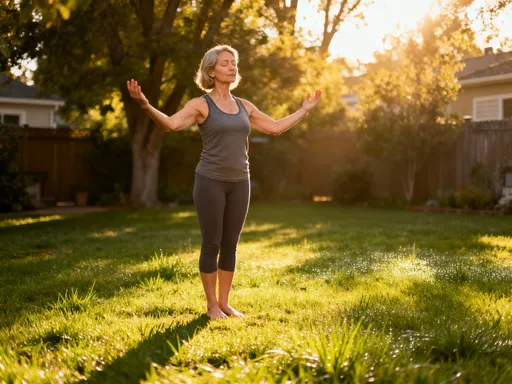
When I first started qigong, I was skeptical. Could a few minutes of slow arm movements really make a difference? I decided to approach it like any other health experiment—systematically and consistently. I began with just five minutes a day, using a simple routine focused on breath and gentle rocking motions. I chose a quiet corner of my living room, set a timer, and committed to practicing at the same time each morning. Consistency, not duration, became my priority.
Those first few weeks were humbling. My mind wandered constantly. I felt awkward moving so slowly. But I noticed small changes: I was breathing more deeply without thinking about it, my shoulders felt less tense, and I woke up feeling slightly more rested. Encouraged, I gradually increased my practice to 10, then 15 minutes, adding new movements that targeted areas of tightness—my lower back, hips, and neck. I followed structured sequences from certified instructors, ensuring proper alignment and pacing.
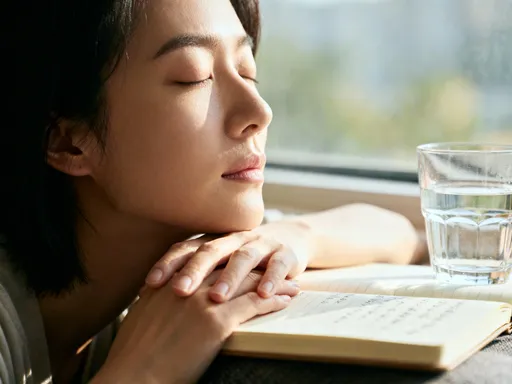
To track progress, I kept a journal. Each day, I noted how I felt before and after practice—energy levels, pain intensity, mood, and sleep quality. Over time, patterns emerged. On days I practiced, I had more patience with my family, fewer headaches, and better digestion. The journal also helped me stay accountable. There were days I wanted to skip—when the kids were loud, or work was overwhelming—but seeing the cumulative benefits reminded me why I started.
Body awareness became a cornerstone of my practice. Instead of pushing through discomfort, I learned to observe sensations without judgment. If a movement caused strain, I modified it. If I felt fatigued, I rested. This non-competitive approach was a revelation. Unlike other fitness programs that measured success by reps or intensity, qigong rewarded presence and self-compassion. Over several months, my practice evolved from a rehabilitation tool into a daily ritual—a time to reconnect with myself before the demands of the day began.
Real Results: What Changed—and What Didn’t
The changes didn’t happen overnight, but they were undeniable. After three months of consistent practice, my sleep improved significantly. I fell asleep faster, stayed asleep longer, and woke without that heavy, groggy feeling. My chronic lower back pain, which had persisted for years, decreased by at least 60 percent. I no longer reached for pain relievers every time I stood up from sitting. My focus sharpened—I could read for longer periods without losing concentration, and I felt more present during conversations with my children.
Perhaps the most surprising shift was emotional. Anxiety, which had quietly woven itself into my daily life, began to loosen its grip. I didn’t eliminate stress—life still brought its challenges—but my response to it changed. I became less reactive, more grounded. When frustration arose, I noticed it sooner and could choose how to respond, rather than being swept away by emotion. This newfound resilience didn’t come from positive thinking or willpower; it came from the daily practice of returning to my breath, my body, and the present moment.
It’s important to be honest: qigong didn’t fix everything. It didn’t reverse aging or eliminate all physical limitations. I still have days when my joints ache, especially in cold weather. I still face stress at work and home. But what changed was my capacity to handle these challenges. Pain became information, not a crisis. Fatigue became a signal to rest, not a failure. Qigong didn’t make life easier—it made me stronger in the face of life’s ordinary difficulties.
And it wasn’t a magic solution. It required patience and repetition. There were weeks when progress felt stalled, when I questioned whether I was doing it “right.” But the practice taught me to trust the process. Healing isn’t linear. It’s a spiral—sometimes moving forward, sometimes circling back, but always deepening. The reliability of qigong lies in its consistency. It doesn’t promise instant transformation, but it delivers steady, cumulative benefits that build over time.
Integrating Qigong into Rehabilitation: A Practical Framework
One of the most powerful aspects of qigong is its ability to complement medical care. I continued my physical therapy sessions while practicing qigong, and my therapist noticed improvements in my range of motion and balance. She encouraged me to keep going, recognizing that qigong supported what we were doing in treatment. This integration is key—qigong is not a replacement for professional medical advice, but a valuable addition to a holistic recovery plan.
Timing matters. I found that practicing in the morning helped set a calm tone for the day, while evening sessions supported relaxation and sleep. During acute phases of recovery, shorter, more frequent practices—such as three 5-minute sessions—were more effective than one long session. On days with higher pain levels, I focused on seated breathing exercises and visualization techniques, which required no movement but still promoted relaxation and circulation.
Tailoring the practice to individual needs is essential. For women recovering from surgery, especially abdominal or pelvic procedures, gentle abdominal breathing and pelvic floor awareness exercises can aid healing without strain. Those managing arthritis or joint pain benefit from slow, circular movements that lubricate the joints and reduce stiffness. People with limited mobility can practice seated qigong, using hand motions and breath to stimulate energy flow. The adaptability of qigong makes it accessible to nearly everyone, regardless of age or physical condition.
Working with a certified instructor, especially in the beginning, ensures safety and proper technique. Many hospitals and wellness centers now offer qigong programs as part of integrative medicine services. Online platforms also provide high-quality, evidence-based instruction. The key is to choose resources that emphasize safety, clarity, and gradual progression, rather than dramatic claims or rapid results.
Sustaining Wellness: From Healing to Daily Maintenance
What began as a tool for recovery has become a lifelong practice. Even after my symptoms improved, I kept practicing—now not to fix something, but to maintain balance. Qigong has evolved into a form of daily self-care, like brushing my teeth or drinking water. It’s no longer something I “make time for”—it’s woven into the fabric of my life.
Consistency didn’t come from discipline alone. I built it through routine, environment, and community. I designated a small space in my home for practice, kept my timer and notebook nearby, and scheduled it like any other important appointment. I also connected with a local qigong group, where we practiced together weekly. Sharing the experience with others—especially women going through similar life transitions—added a layer of support and motivation that kept me going during busy or stressful periods.
Burnout is a real risk, especially for caregivers and working mothers. Qigong helps prevent it by restoring energy rather than depleting it. Unlike intense workouts that leave you drained, qigong replenishes. It’s not about pushing harder—it’s about moving with intention and awareness. This makes it sustainable over decades, not just weeks or months. As I’ve aged, my practice has naturally shifted—less emphasis on complex movements, more on stillness and breath. This flexibility ensures that qigong remains relevant and beneficial at every stage of life.
In a culture obsessed with speed, productivity, and visible results, qigong offers a quiet counterbalance. It doesn’t require expensive equipment, special clothing, or hours of time. It asks only for presence. And in that presence, something profound happens: the body remembers how to heal, the mind finds clarity, and the spirit feels at peace. For women navigating the complexities of midlife—hormonal changes, caregiving roles, career demands—qigong provides a stable anchor in an ever-shifting world.
Qigong didn’t just help me recover—it taught me how to listen to my body again. In a world obsessed with speed and intensity, its quiet power offers something deeper: balance, awareness, and sustainable healing. For anyone navigating recovery or simply seeking calmer health habits, this time-tested practice could be the missing piece. Always consult your healthcare provider, but don’t overlook the strength in stillness.